Elmbrook Journal · For families and caregivers
12 Gentle Memory Care Activities for Seniors
The best memory care activities for seniors are simple, familiar and calm. A favorite song, an old photo album or a large print word search can turn an ordinary afternoon into a pleasant moment together.
Whether you care for a parent at home or plan activities in an assisted living or memory care community, this guide shares 12 easy ideas that need little preparation, plus practical tips to make each activity feel relaxed and successful.
- Puzzles
- 100
- 30-point
- Words per puzzle
- 9
- Grids
- 10×10
- Words run
- Across and down
How to choose the right memory care activity
A good activity is not about learning something new or getting the right answer. It is about comfort, connection and a feeling of being capable. When you choose an activity, think about:
- Past interests: a former gardener may love potting plants, a home baker may enjoy stirring a simple batter.
- Simplicity: one or two easy steps work better than long instructions.
- No wrong answers: choose activities where there is no way to fail.
- Senses: music, textures, smells and clear visuals often reach people in a way words do not.
Music and memories
1. Listen to favorite songs
Music from a person's teens and twenties is often the most familiar. Make a short playlist of songs they loved, sing along, tap the rhythm or simply listen together.
2. Look through a photo album
Old family photos are a gentle way to start a conversation. Instead of asking "Do you remember?", try "Tell me about this picture" or talk about what you see.
3. Make a memory box
Fill a box with meaningful objects: a scarf, postcards, a small tool, a recipe card. Holding and describing familiar things can be very comforting.
Everyday hands-on activities
4. Fold towels or washcloths
Familiar household tasks give a sense of purpose. Folding a small basket of towels is calming, and there is no wrong way to do it.
5. Sort buttons, coins or playing cards
Sorting by color or size is a simple, repetitive activity that many people find relaxing.
6. Water plants or pot a small flower
Gardening, even indoors, connects with nature and with years of past experience. A small pot, some soil and a seedling are enough.
7. Help with simple baking
Stirring a batter, decorating cookies or setting out muffin cups brings back the smells and routines of the kitchen.
Creative and sensory ideas
8. Coloring with large, simple designs
Choose pages with bold lines and familiar subjects such as flowers, birds or teacups, and use chunky colored pencils or markers.
9. Hand massage with a scented lotion
A gentle hand massage with a familiar scent such as lavender or rose is a quiet, caring moment of connection.
10. Look at nature together
Sitting by a window to watch birds, or a short walk in a garden, offers calm and natural conversation starters.
Puzzles and word games
11. Large print word search puzzles
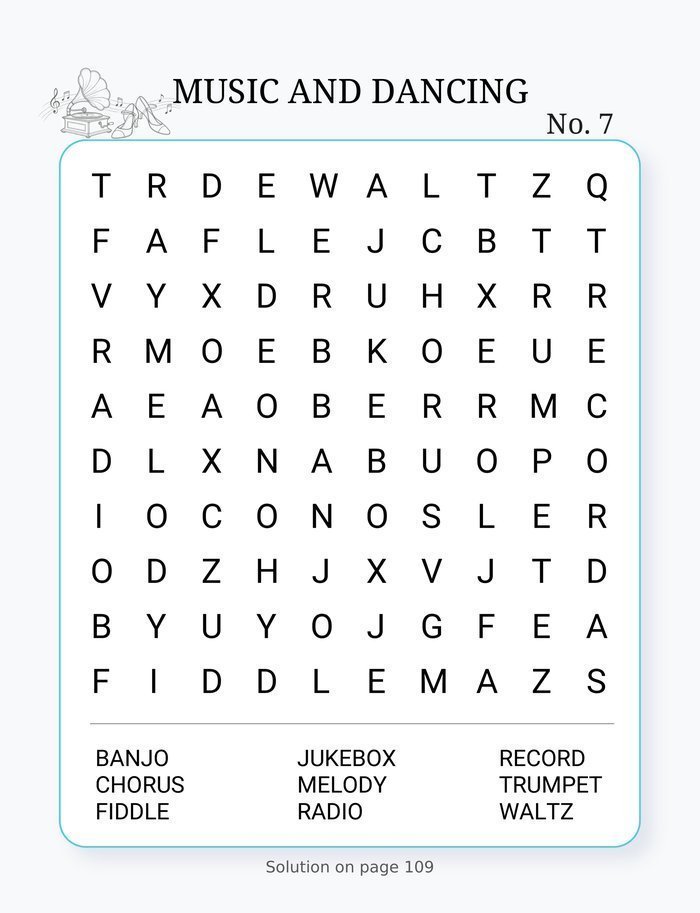
Word searches are a familiar pastime for many seniors, and they can be enjoyed alone or side by side with a family member. For memory care, the right puzzle makes all the difference. Look for:
- Extra large print that is easy on the eyes.
- Few words per puzzle, so each page feels achievable.
- Familiar themes such as family, cooking, music or the garden.
- Words that run only across and down, with no diagonals or backwards words.
- Solutions that are easy to find, so help is always close.
12. Simple jigsaws and familiar word games
Jigsaw puzzles with 12 to 50 large pieces, or finishing well-known sayings together ("an apple a day…"), are other gentle ways to share a puzzle moment.
Tap a page to see it full size.
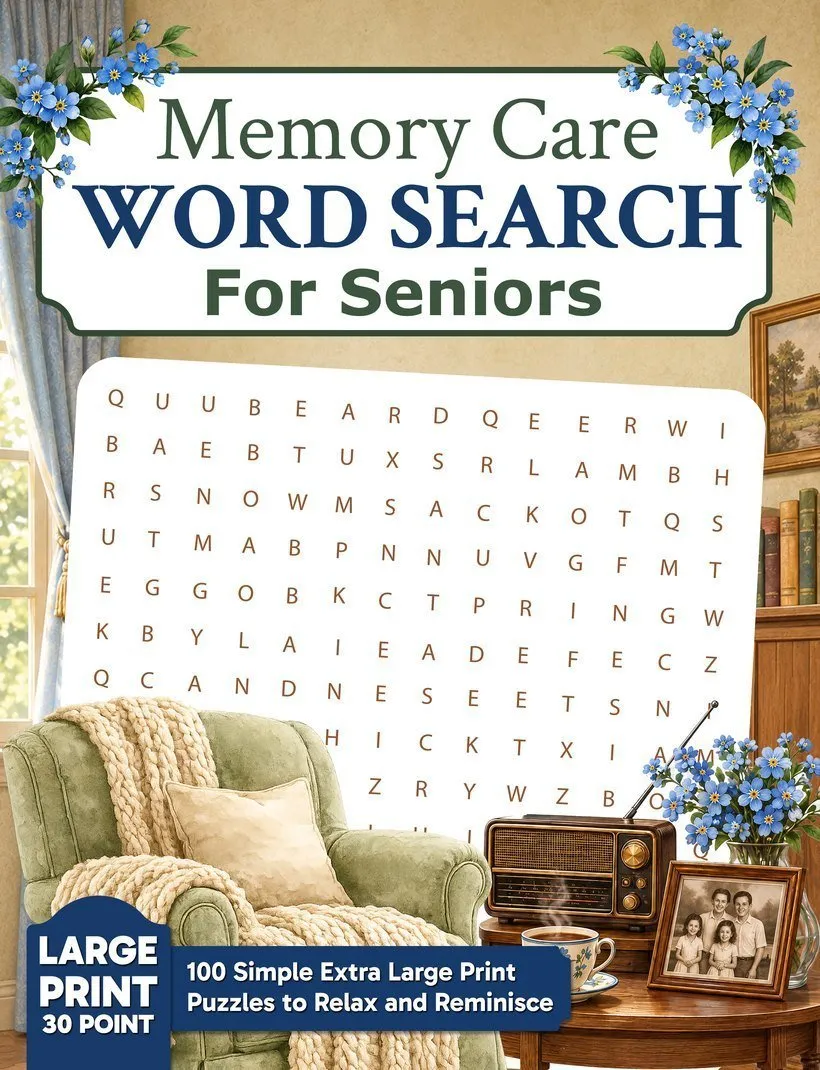
Memory Care Word Search for Seniors
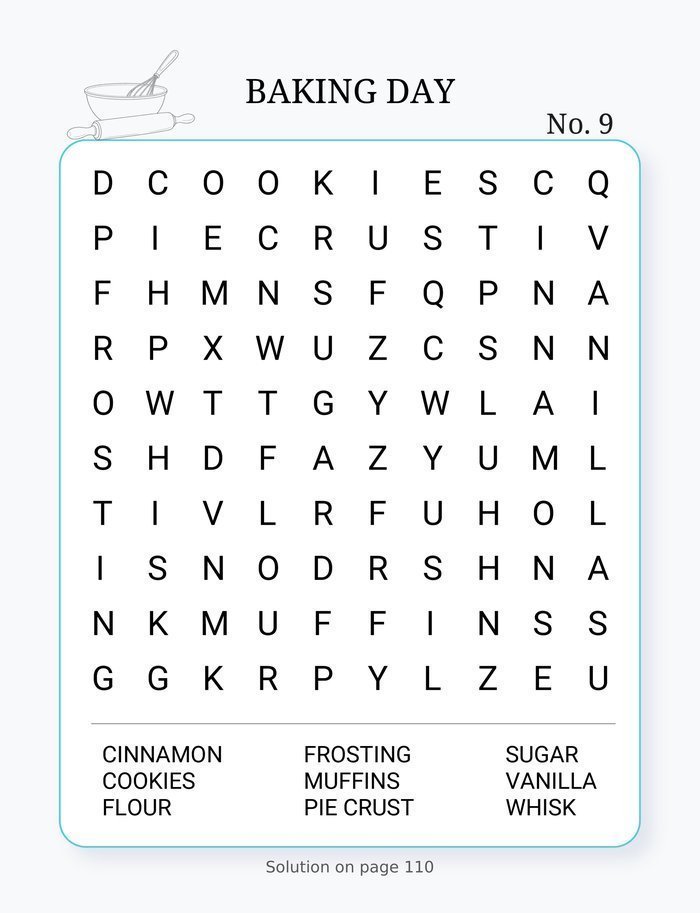
We designed this book for exactly these moments: 100 simple puzzles in extra large 30-point print, with just 9 familiar words per puzzle on clean 10x10 grids. Words run only across and down, every puzzle shows the page of its solution, and full solutions are included at the back.
View on Amazon.comWould you like to try a puzzle first? Download our free large print word search puzzles, or explore all our large print word search books for seniors.
Tips for caregivers
- Keep it short. Ten to twenty minutes is often enough.
- Do it together. Sitting side by side turns an activity into a shared moment.
- Follow their lead. If an activity is not working today, gently switch to something else.
- Praise the effort. The goal is enjoyment, not perfect results.
- Pick a calm time. Many people feel best in the morning or after lunch.
Every person is different. If you have questions about health, mood or daily routines, talk with their doctor or care team, who can suggest activities suited to their needs.
Frequently asked questions
What are good activities for seniors in memory care?
Simple, familiar activities usually work best: listening to favorite music, looking through photo albums, folding towels, sorting buttons, watering plants, coloring and large print word search puzzles. Choose activities that connect with the person's past and can be enjoyed without pressure.
How long should a memory care activity last?
Short sessions of 10 to 20 minutes are often enough. Watch for signs of tiredness or frustration and stop while the activity still feels pleasant.
Are word search puzzles good for people in memory care?
Many families and activity staff use simple word searches as a calm, familiar pastime. The best puzzles for this use have large print, few words, familiar vocabulary and words that run only across and down.
What is the best time of day for activities?
Many people feel most alert in the morning or after lunch. Late afternoon can be harder for some, so quiet, comforting activities often work better then.
Relaxing & cozy mystery