Elmbrook Press · Logic puzzles
Train Track Logic Puzzles for Adults
Follow the clues.
Complete the track.
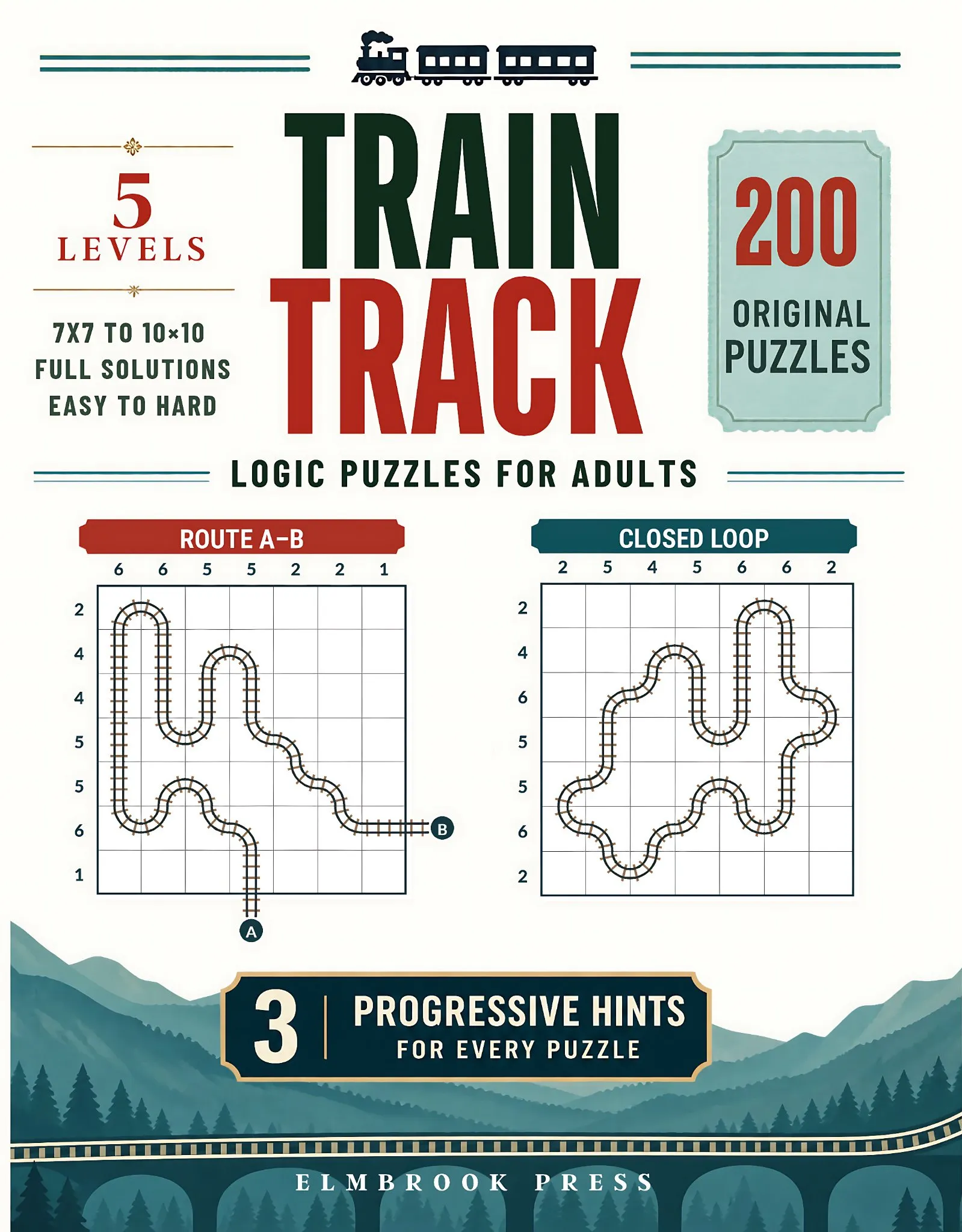
A row of numbers, a few printed rails, and a railway waiting to be found. Build a route from A to B or complete a closed loop, one deduction at a time.
- original puzzles
- 200
- levels of challenge
- 5
- hints for every puzzle
- 3
- ways to play
- 2
Two ways to play
Two puzzle styles, one continuous track
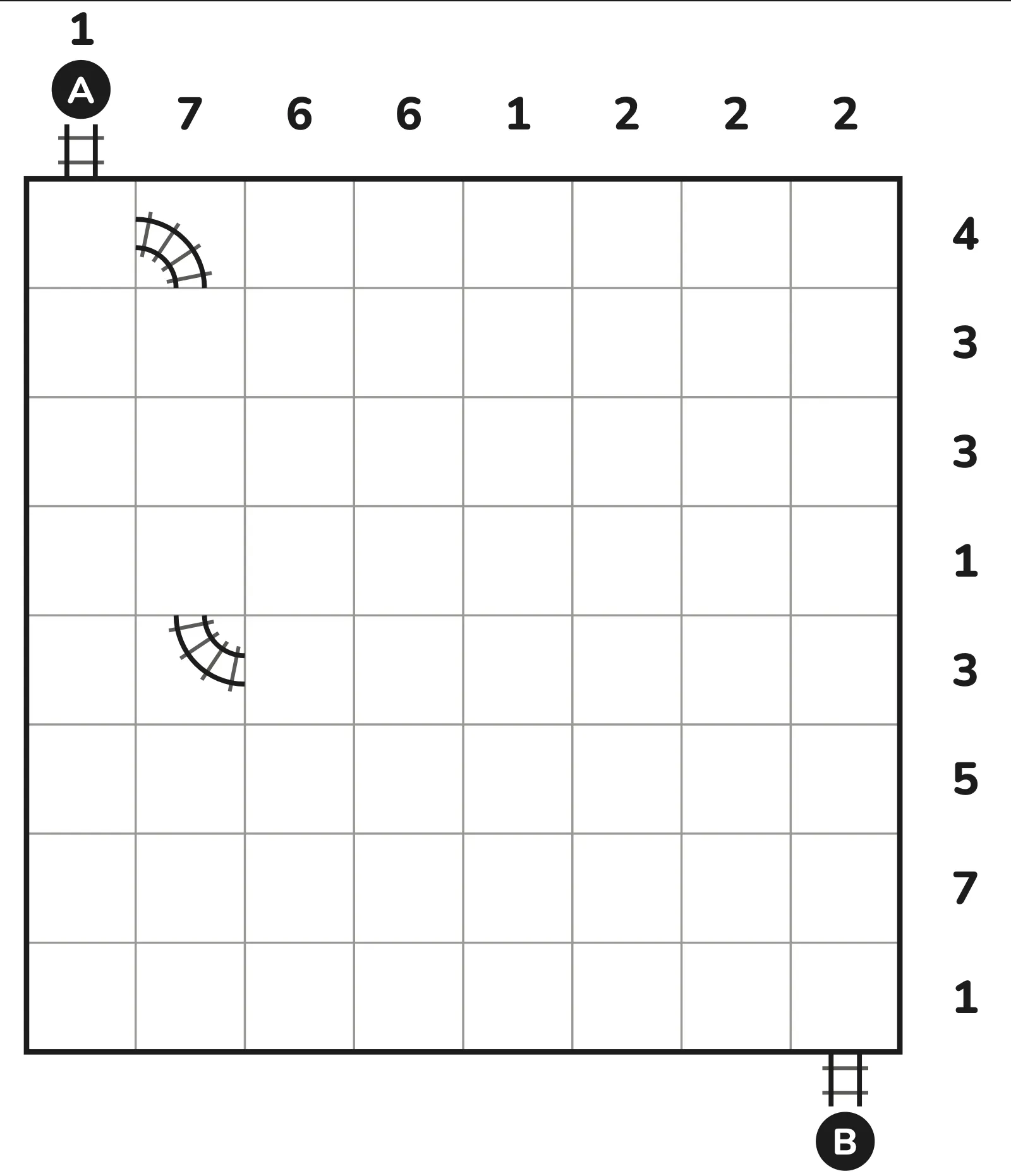
A train track puzzle asks you to work out where a railway belongs on a grid. The numbers around the edge tell you how many squares in each row and column must contain track. The pieces already printed on the page are fixed clues: keep them in place as you complete the track.
Both styles use the same counting rules. Every track square connects two of its sides, either straight through or around a bend. There are no crossings, branches or dead ends within the grid.
Join the two stations
Draw one unbroken line from A to B. Every piece of track must belong to that route.
Bring the track back around
Draw one continuous circuit with no start or finish. Separate little loops do not complete the puzzle.
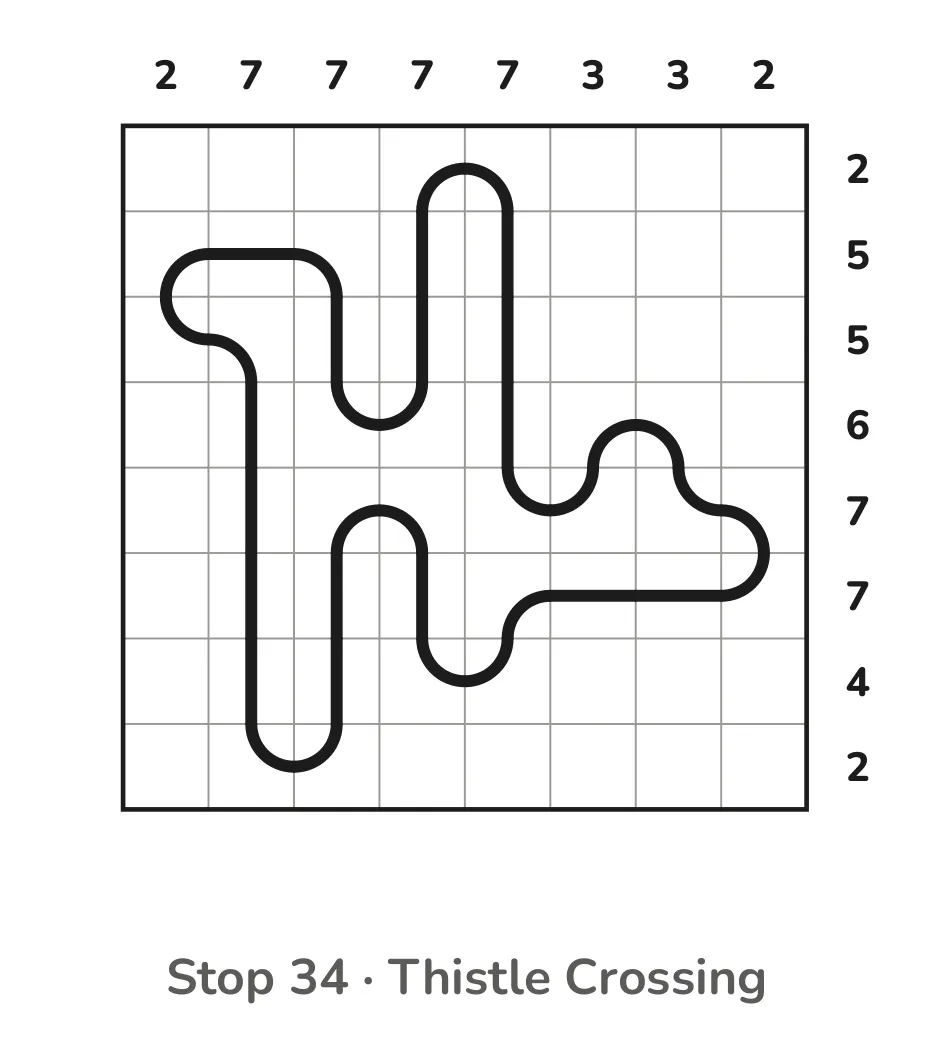
These are completed examples from the actual book. Open the original solutions page.
Riverside Line · Level 2 · Printed page 26
Start with what you know
How to solve a train track puzzle
1. Count the track squares
A clue of 4 means exactly four squares in that row or column hold track. A bend still counts as one square. Once a row has all the track it needs, mark its remaining squares with an X.
2. Follow the printed pieces
The printed rails cannot be moved or rotated. Continue from the sides they already connect. You can draw a simple pencil line through the center of each square; there is no need to draw every rail and tie.
3. Keep the whole route connected
Use the counts and the available sides to decide what comes next. Mark an X where track cannot go, or a dot where track is certain but its direction is not yet known. Check that the final line matches every number.
In the example here, the left-hand column needs only one track square. The entry at A already supplies it. That immediately rules out the other seven squares in that column: a small deduction that gives you somewhere definite to begin.
A little help when you need it
Three progressive hints, then the full solution
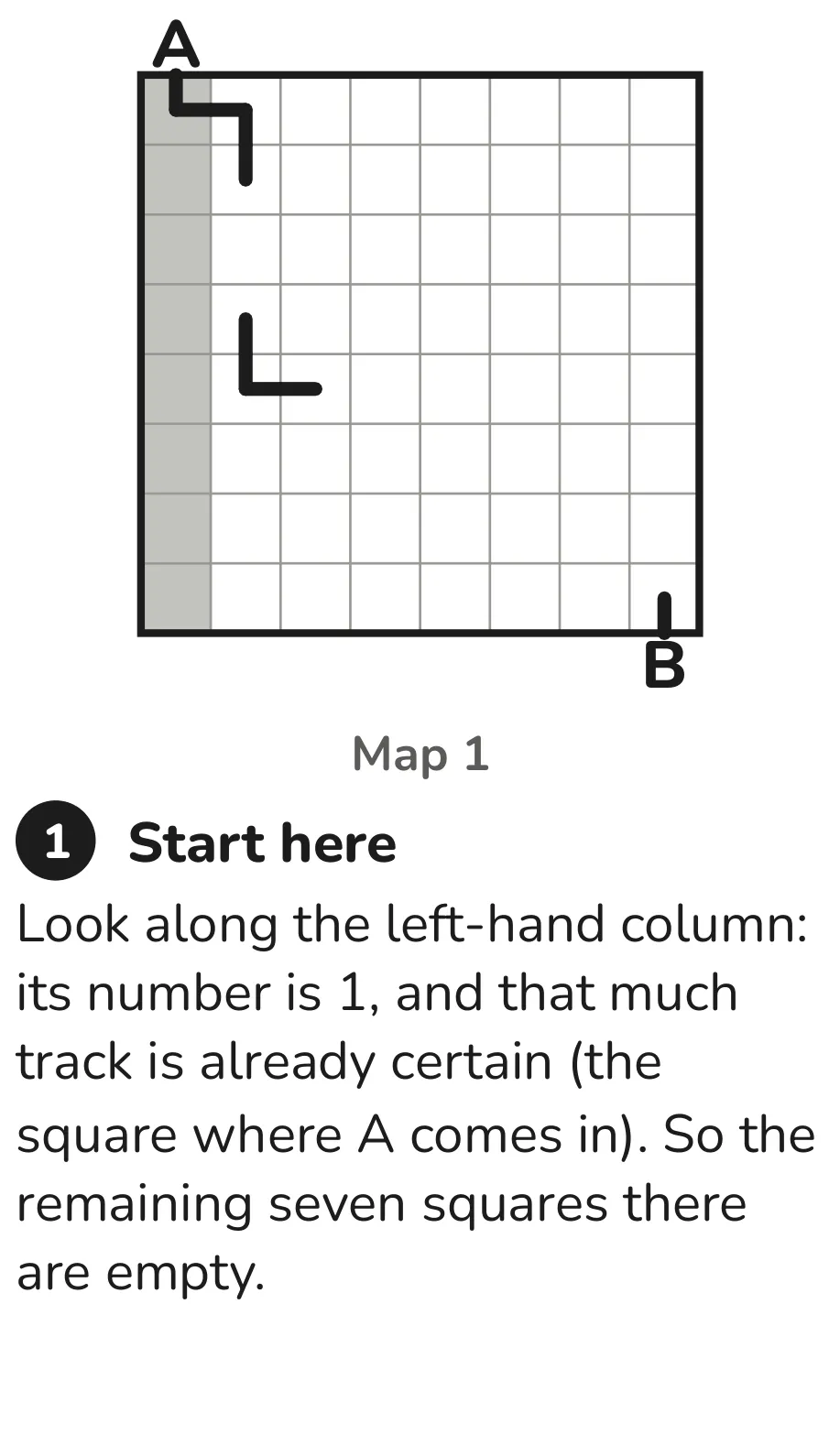
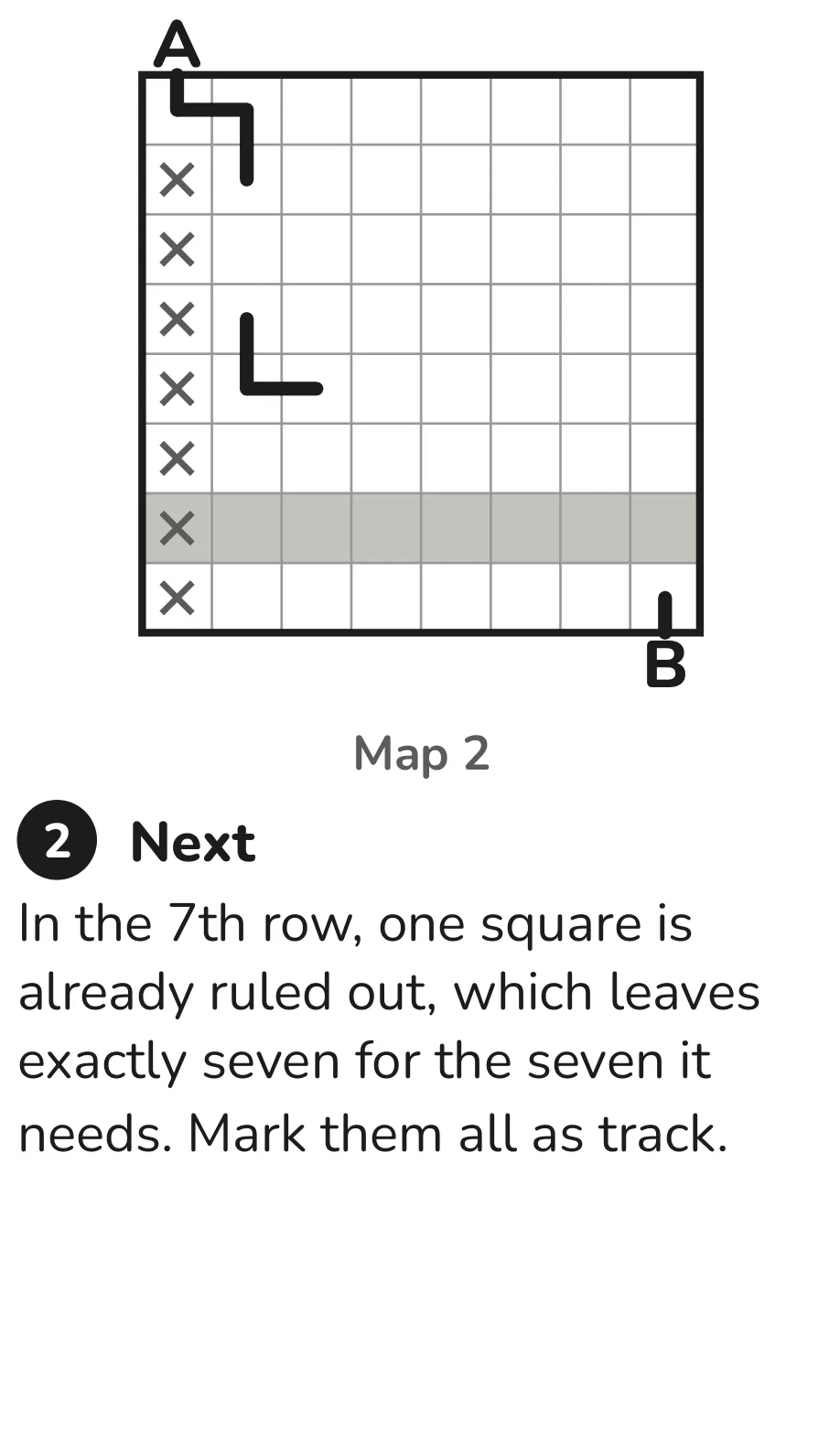
Every puzzle has three hints, called Signals in the book. Each one includes a small map showing what can be established at that stage. Read one hint, return to the puzzle, and continue from there. You can leave the next hint closed until you need it.
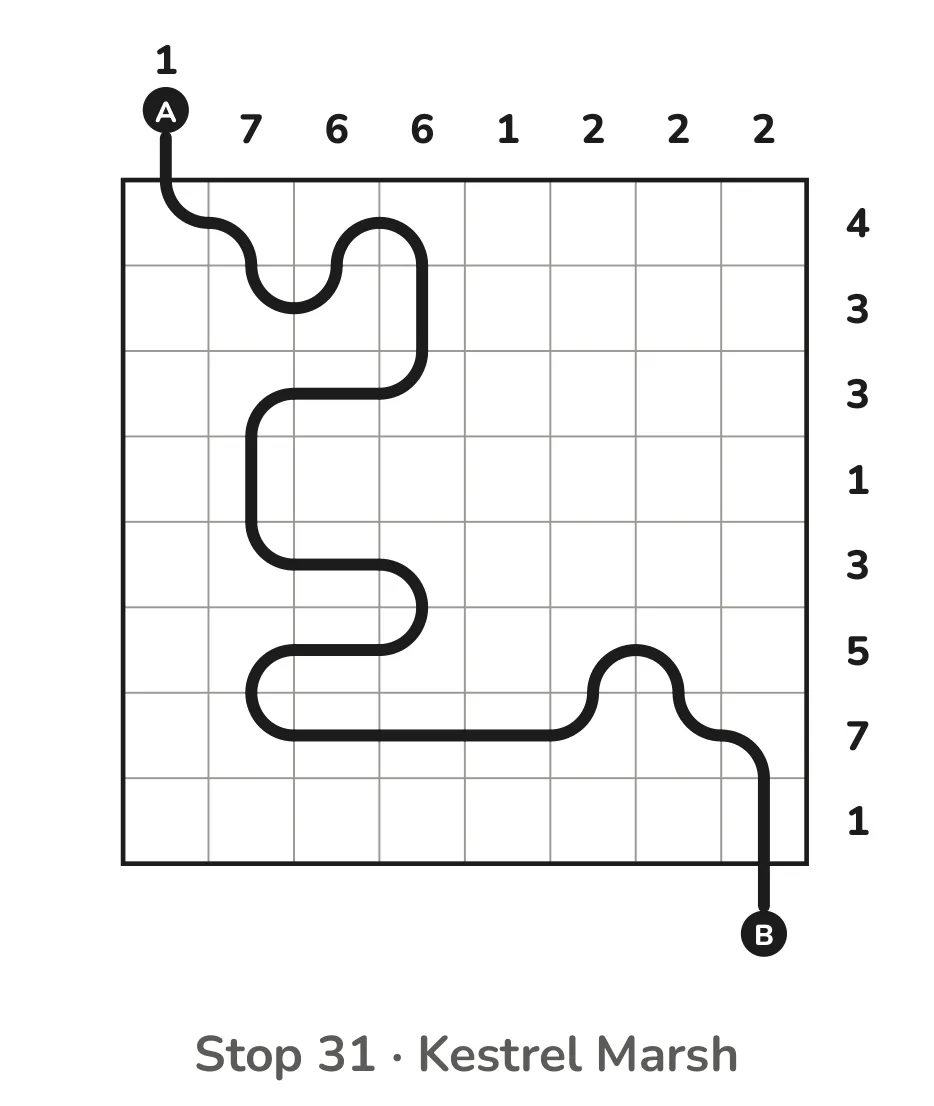
The three examples below all belong to Stop 31, Kestrel Marsh, the puzzle shown above. The finished solution is for that same stop. These are extracts from the printed pages, with the original diagrams and wording.
In these hints, ideas A and B refer to counting and checking the available connections. Idea C checks that the track stays in one line.
01Start hereOpen the first hint
02NextOpen the second hint
03Key momentOpen the third hint
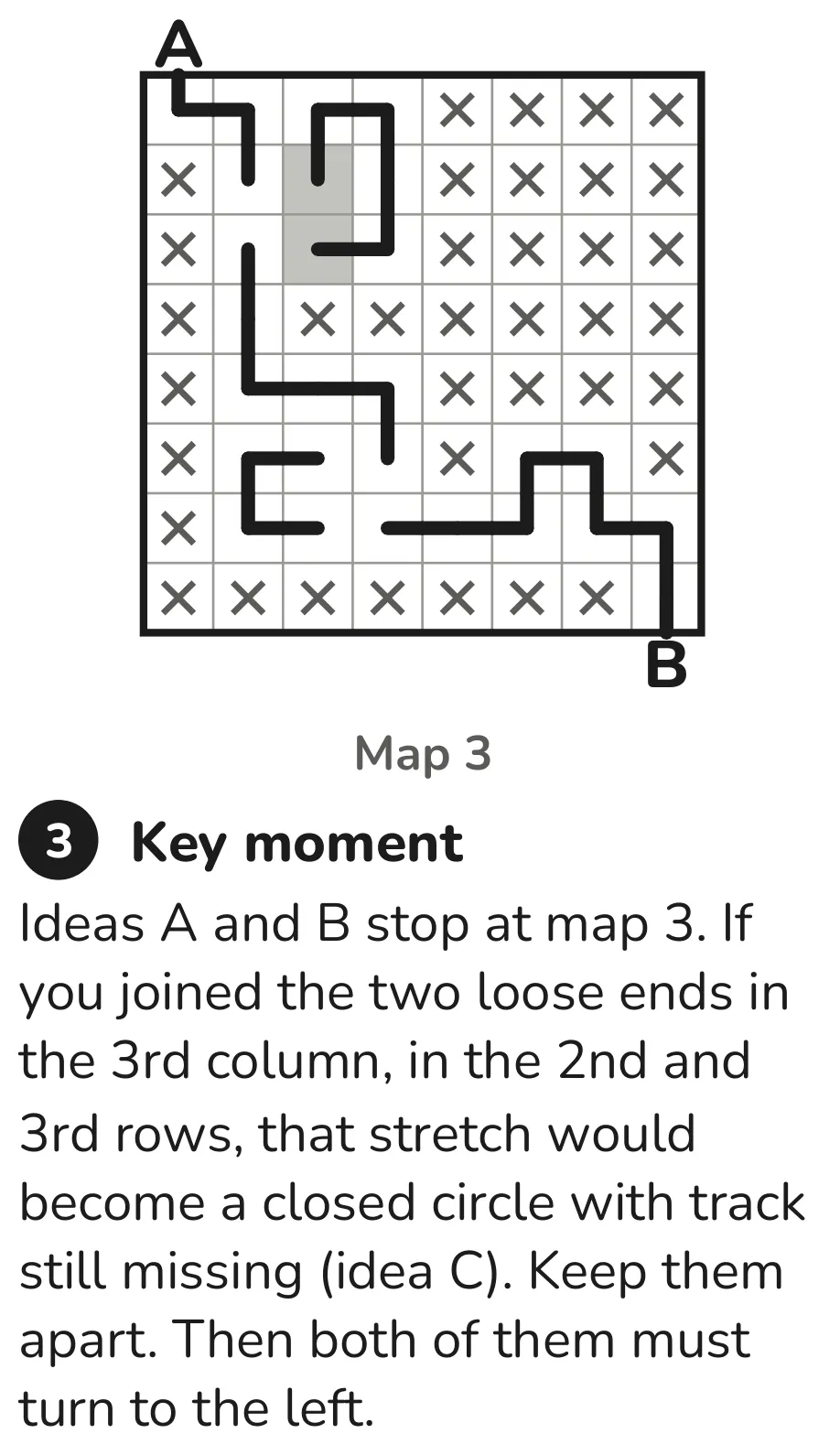
Three hints for Stop 31 · Printed page 149. View the complete original hints page.
Show the complete solution for Stop 31
Stop 31 · Kestrel Marsh · Printed page 239
The opening pages also include the rules, five solving ideas, and a fully worked example. For later puzzles, each stop points you to its own hints and solution, so you can find the help that belongs to the page in front of you.
The Elmbrook Railway
200 puzzles across five railway lines
The book is organized as a railway journey through five levels. Begin with counting and connections on the Meadow Line, then move into more involved deductions as the journey continues. The puzzle grids range from 7×7 to 10×10.
Later levels introduce short logical “what-if” checks: follow the consequences of a possibility, and rule it out if it breaks a rule. The focus develops through the five lines below.
| Level and line | Stops | Solving focus |
|---|---|---|
| 1 · Meadow Line | 1–30 | Count and connect |
| 2 · Riverside Line | 31–70 | One line |
| 3 · Valley Line | 71–120 | Careful counting |
| 4 · Ridge Line | 121–165 | Quick what-if |
| 5 · Summit Line | 166–200 | Deep what-if |
Each puzzle has a small ticket where you can note the date, your time, and how many hints you used. Take a single stop for a short break, or work through a line over several sittings. All 200 puzzles include three progressive hints and a complete solution.
Train Track is for adults who enjoy working through a problem with a pencil and seeing the pieces connect. If you are new to this style of puzzle, start with the worked example before moving to Stop 1.
After the Summit Line
The Elmbrook Railway continues
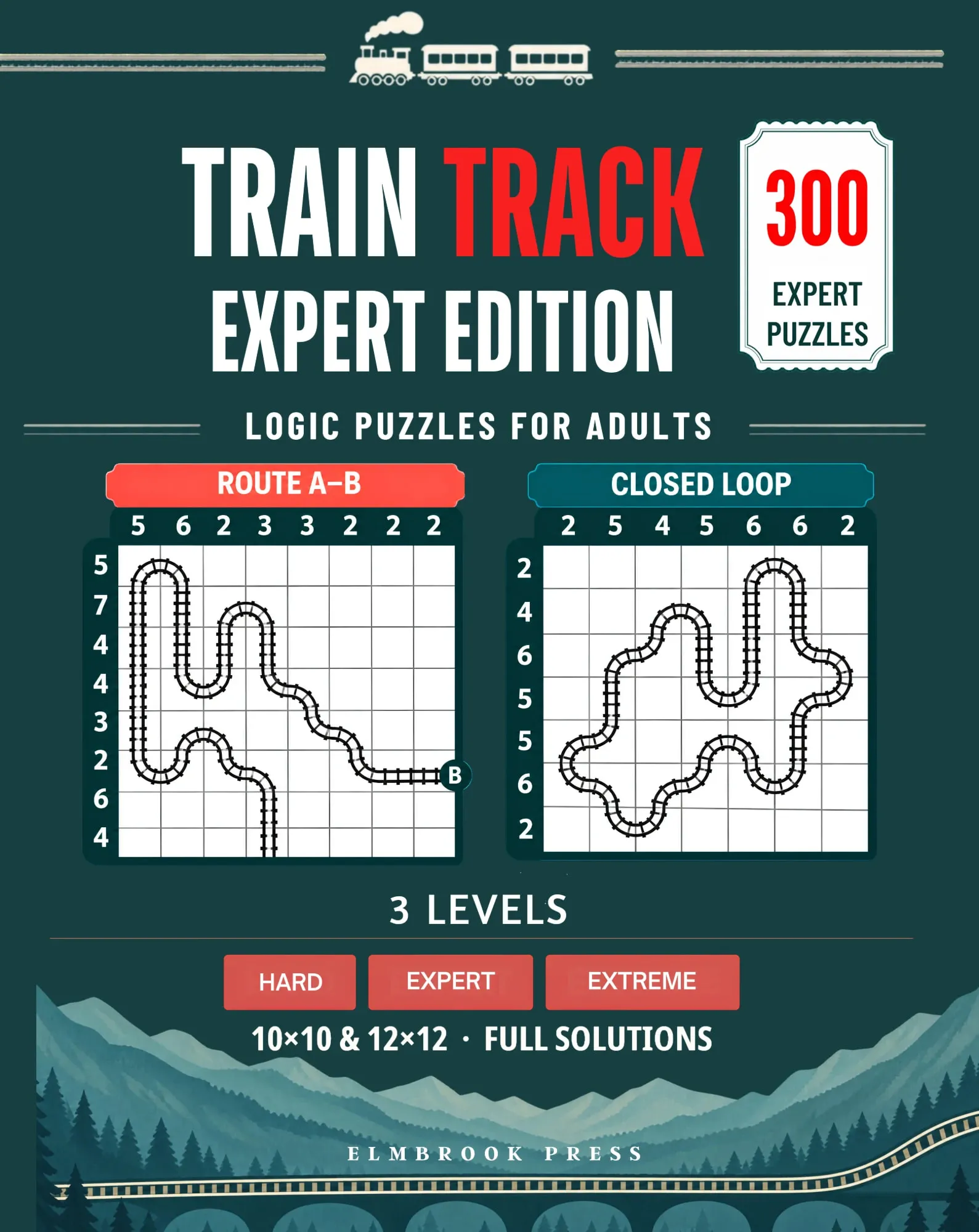
Train Track is the starting point of the series. When you want a harder road, Train Track Expert Edition picks it up: 300 new puzzles in three grades, Hard, Expert and Extreme, on 10×10 and 12×12 grids, with no hints and none of the puzzles from this book.
Book one
Train Track: The Elmbrook Railway
- Meadow LineCount and connect
- Riverside LineOne line
- Valley LineCareful counting
- Ridge LineQuick what-if
- Summit LineDeep what-if
Book two
Train Track Expert Edition
- HardTypically 7 what-ifs per stop
- ExpertTypically 9 per stop
- ExtremeTypically 11 per stop
| Train Track: The Elmbrook Railway | Train Track Expert Edition | |
|---|---|---|
| Puzzles | 200 | 300 |
| Grid sizes | 7×7 to 10×10 | 10×10 and 12×12 |
| Structure | Five levels, the Meadow to the Summit Line | Three grades: Hard, Expert and Extreme |
| Hints | Three for every puzzle | None: every stop is solved by reasoning alone |
| What-if checks | Introduced in the later levels | Part of every grade |
| Puzzle styles | A-to-B routes and closed loops | A-to-B routes and closed loops |
Logic puzzles