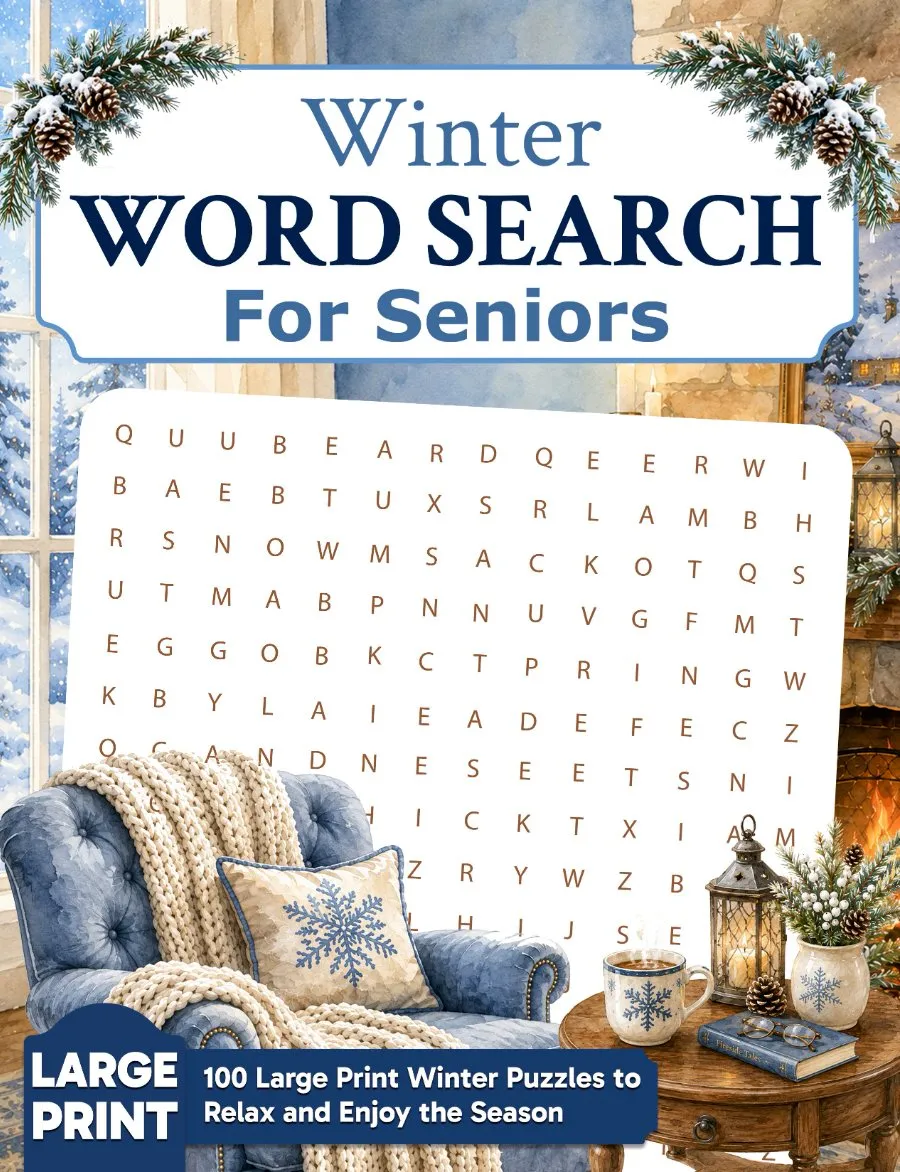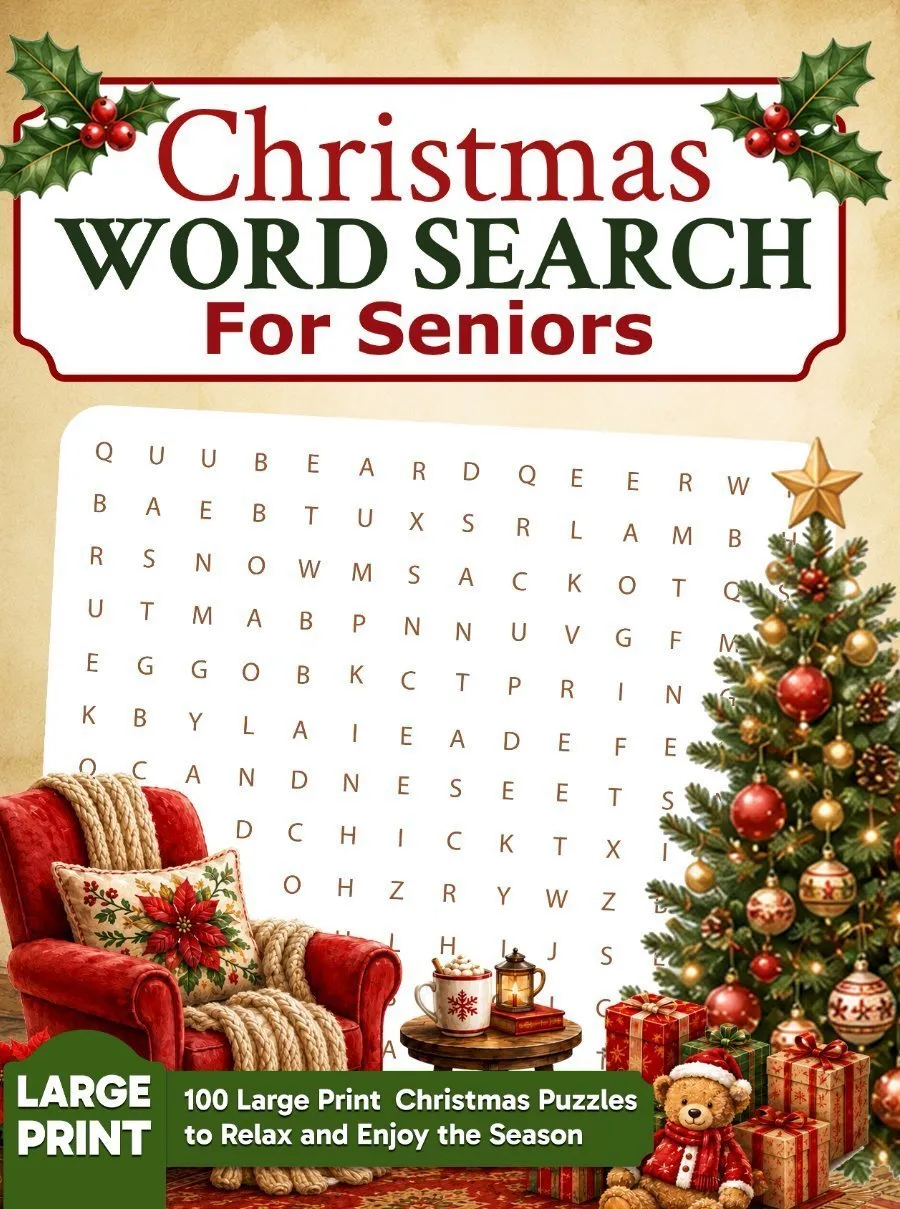
Winter changes the shape of the day. Errands get postponed, the garden goes quiet, and afternoons stretch out indoors. For many older adults that is a welcome change of pace, but it also leaves a gap where something pleasant used to go. A puzzle book fills that gap neatly. It asks nothing in advance, needs no setup, and can be picked up for five minutes or a whole afternoon.
This guide looks at why word searches suit the season so well, what separates a genuinely comfortable large print puzzle book from one that only says "large print" on the cover, and what to look for before you buy one for yourself or as a gift.
Why Word Searches Work So Well as a Winter Activity
Not every pastime fits a cold, dark afternoon. Some need company, some need space, and some need more energy than a quiet January day tends to offer. A word search asks for none of those things.
It matches the pace of the season
There is no clock and no score. You scan a grid, spot a word, circle it, and move on. That steady rhythm suits the way winter days unfold: unhurried, indoors, with a cup of something warm nearby. It is the kind of activity you can drift into rather than start.
Easy to pick up and put down
Unlike a jigsaw that takes over the dining table for a week, a puzzle book closes and goes back on the side table. If the phone rings or a visitor arrives, nothing is lost. For anyone whose day is broken up by appointments, meals, or a short nap, that flexibility matters more than it sounds.
A break from screens
Winter afternoons can easily disappear into the television. Paper offers a different kind of attention, quieter and easier on the eyes, with no glare, no notifications, and nothing to charge.
What Makes a Word Search Senior-Friendly
The phrase "for seniors" appears on a great many puzzle books, and it does not always mean much. Here is what actually makes a difference when you sit down with one.
Why large print matters
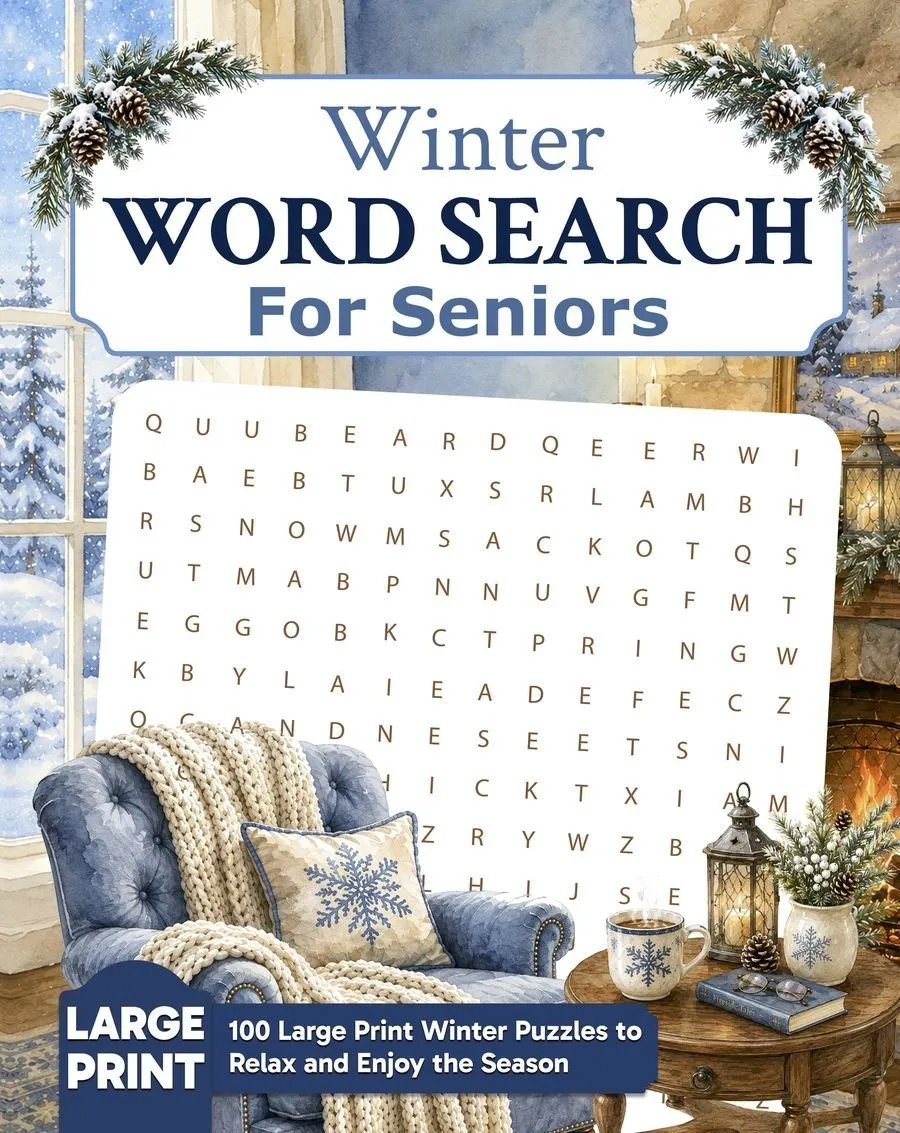
This is the single biggest factor. A word search is a visual task from start to finish, so cramped type makes the whole thing tiring rather than relaxing. Genuinely large print means tall, clearly formed letters with real space around each one, so the eye can move along a row or diagonal without losing its place. If you find yourself squinting on the first puzzle, the book is not right, however appealing the cover.
Room to breathe on the page
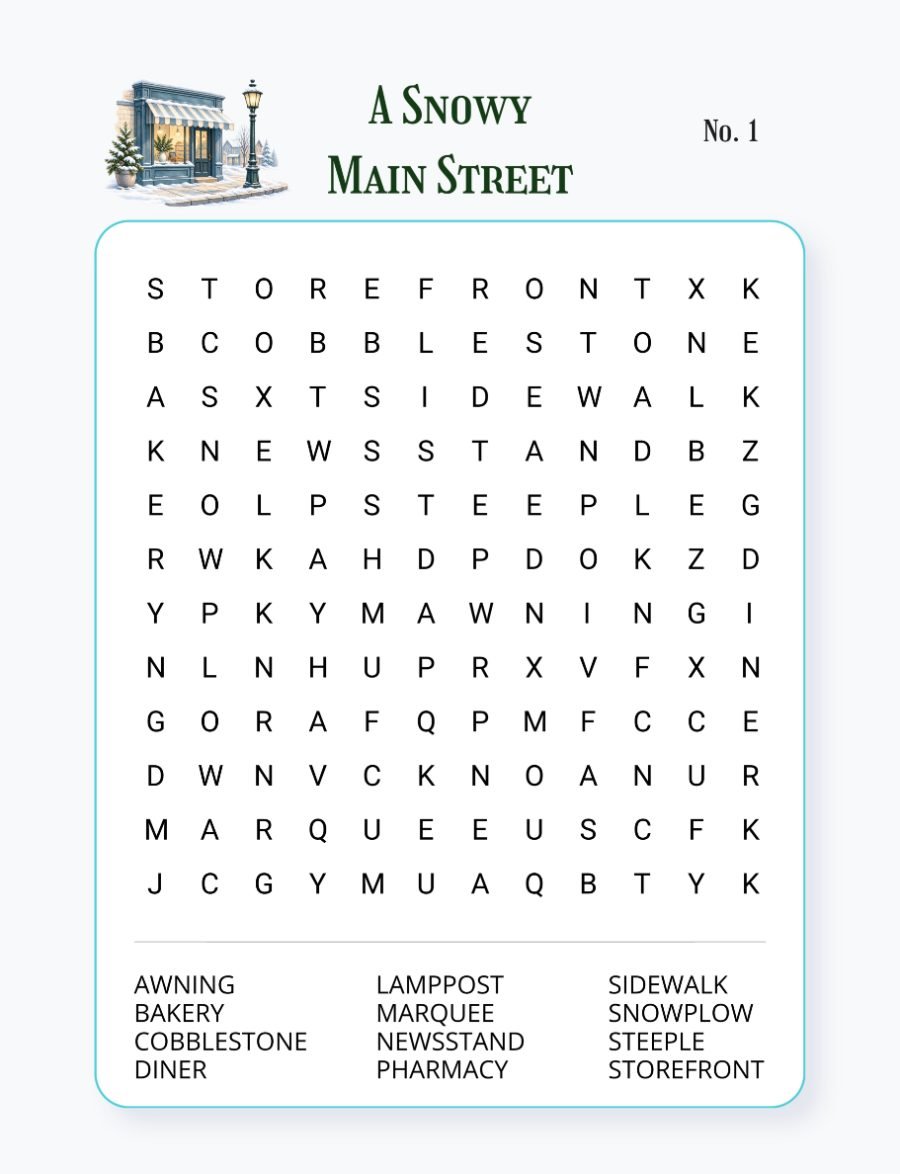
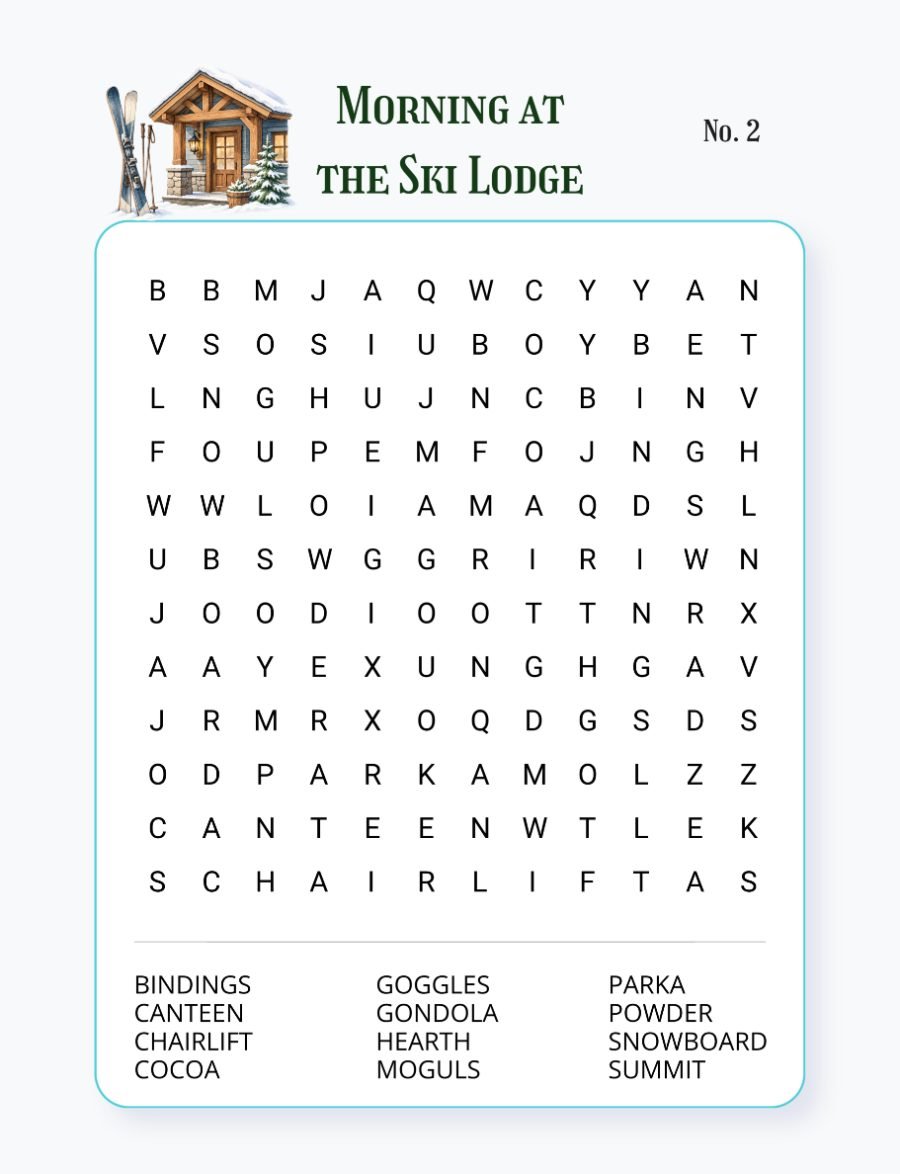
Letter size alone is not enough. Generous spacing between letters, a clear margin around the grid, and a word list that is easy to read at a glance all matter. One puzzle per page is worth looking for too: nothing crowded into the corners, and no need to keep turning back and forth between the grid and the list.
Contrast and paper
Plain black letters on a clean white page are far easier to work with than grey text or a decorative background pattern behind the grid. A little illustration at the top of the page is charming; a busy background under the letters is not.
The importance of interesting themes
A themed puzzle gives the words a reason to be there. Instead of a random assortment, the grid holds a small picture of something familiar, and finding each word carries a flicker of recognition. Themes also keep a long book from feeling repetitive: by puzzle forty, variety is what keeps you turning pages.